Are you unsure about which set of studded diamond earrings fits you best or an upcoming occasion? Rest assured, this blog will help you decide what fits you or your occasion best. You may already have a personal style that suits you best, but does it fit well with that upcoming occasion? There are different styles that are for everyday wear that simply may not go well with that work dinner or holiday party.
Diamond Stud Earring Shapes and Styles
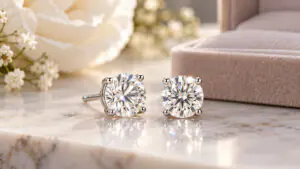
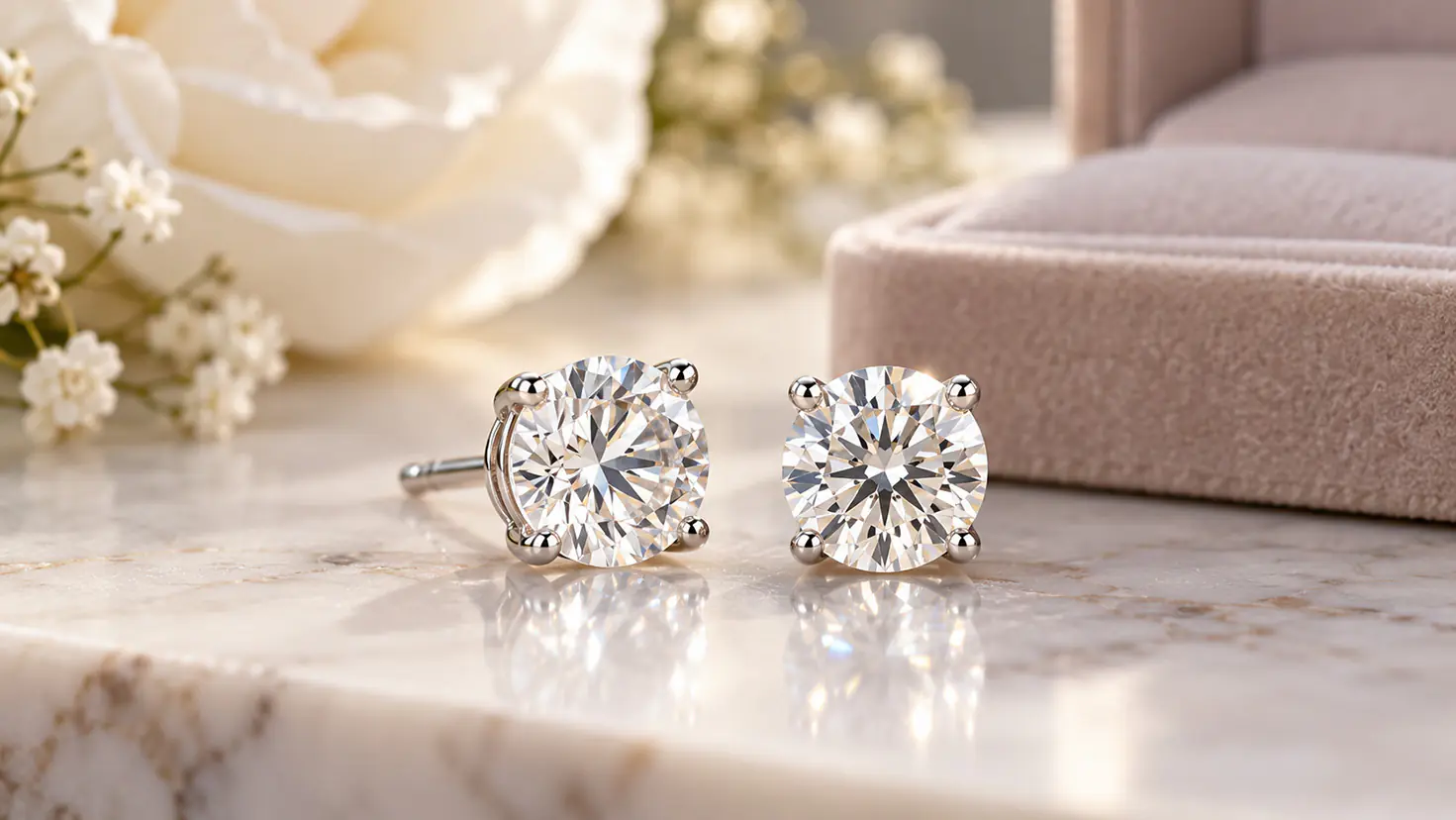
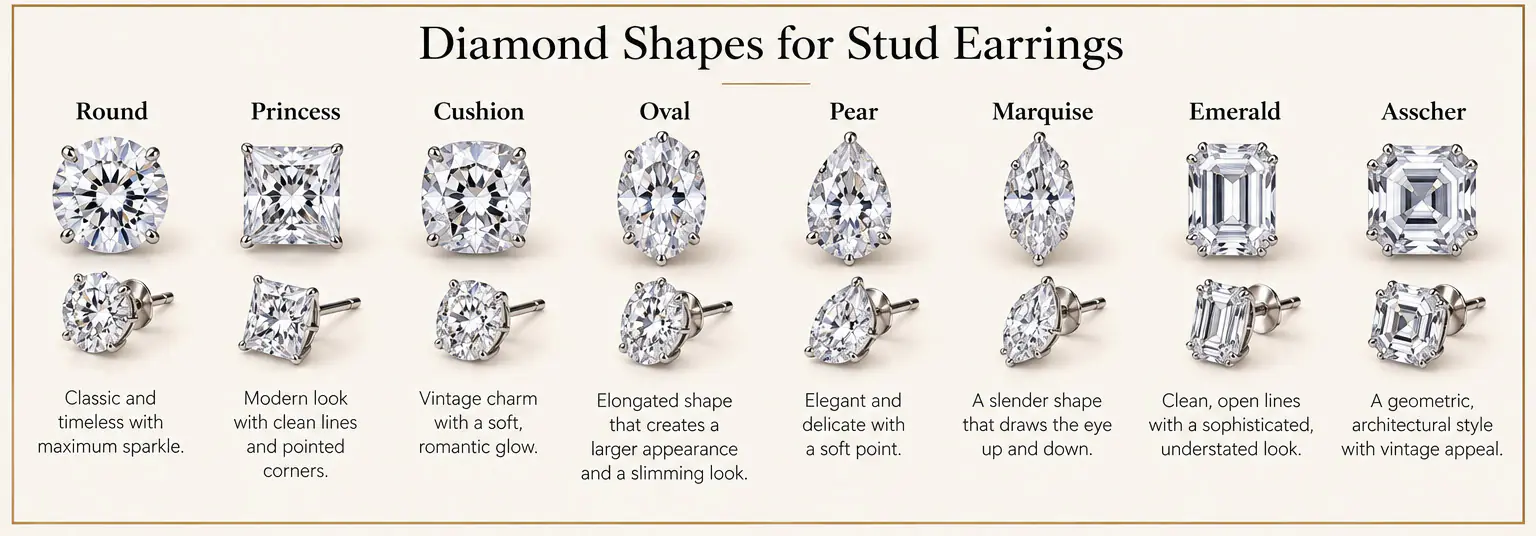
Let’s delve into the different diamond shapes available to you and how they might even look on you. One of the most common shapes in diamond-studded earrings is the round brilliant cut. It is the most traditional and classic choice, basically timeless. It delivers exceptional brilliance and all-around sparkle due to its 57 or 58 facets, depending on whether it has a culet facet. The round brilliant earrings offer a symmetrical appearance that’s conducive to any earlobe or face shape.
Second, princess-cut diamond stud earrings boast a crisp, modern look. Their square shape and pointed corners give them a distinctive appearance compared to traditional round diamonds. These may work particularly well with round faces because of their geometric design.
Elongated shapes such as marquise, pear, and oval cuts also draw the eye up and down. They can offer a larger face-up appearance for their carat weight, depending on their proportions. Pear-shaped studs feature a soft, delicate point while oval or marquise cuts boast a slender, lengthening look to the earlobe.
Emerald and asscher cuts create a hall-of-mirrors effect with clean, open, architectural lines. This look features step cuts rather than brilliant cuts. You might notice it puts off an understated, vintage, geometric silhouette rather than a fiery sparkle. Bezel settings also help accentuate the square or crisp rectangular outline.
Lastly, the cushion cut is a square or rectangular shape with rounded corners and larger, pillow-like facets. The cushion cut gives off vintage charm with a soft, romantic glow.
Choosing Diamond Stud Earrings for Different Occasions
When deciding which diamond stud earrings are right for you, consider where and how often you plan to wear them. Smaller round brilliant or princess-cut studs are excellent choices for everyday wear, whether you’re heading to work, running errands, or enjoying a casual evening out. Their classic appearance makes them easy to pair with almost any outfit without feeling overdressed.
For more formal occasions, such as weddings, holiday parties, or an elegant dinner, you may want something that stands out a little more. Larger diamond studs or elongated shapes such as oval, pear, and marquise can add an elegant touch to your appearance. Emerald and asscher cuts may appeal to those who prefer a more understated, sophisticated look, while cushion cuts offer a softer, romantic appearance.
Understanding Diamond Carat Weight, Cut, Color, and Clarity
Diamond Carat Weight and Cut
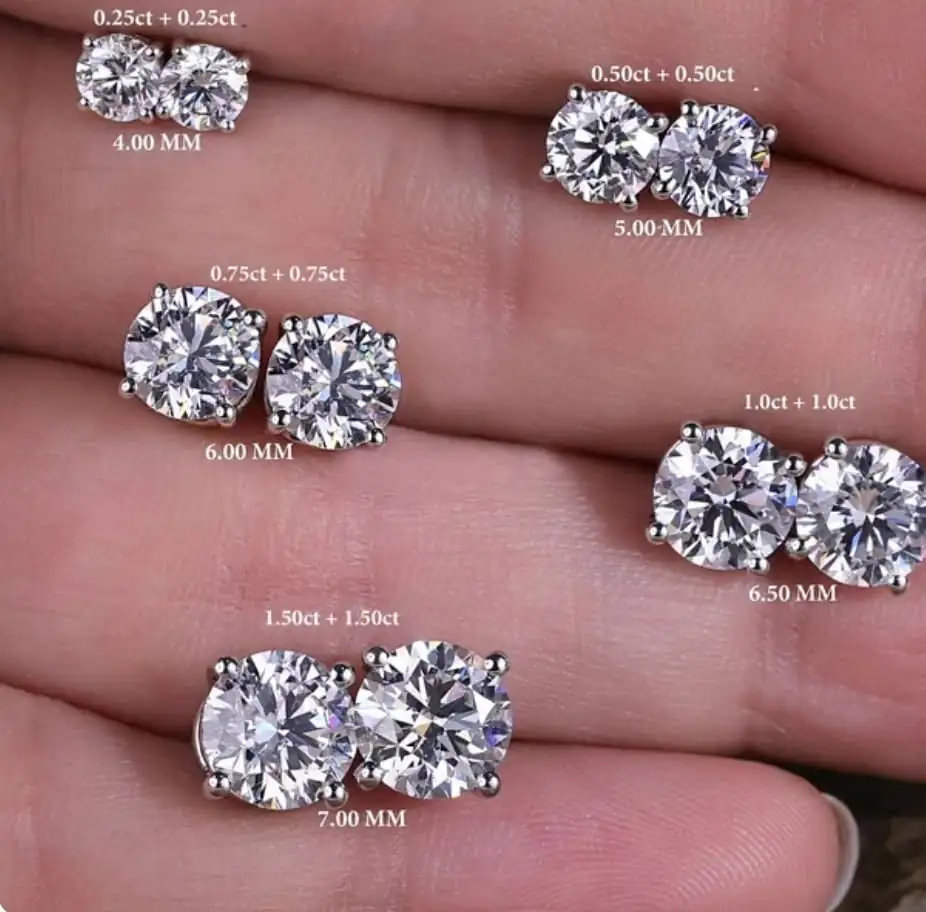
Now that we’ve briefly discussed the diamond-studded earring cuts, let’s delve into other details that will help you decide which pair is right for you. Note: When choosing a pair based on total carat weight, it’s the total stone weight in the pair. For example, 1ctw is the sum of each together, not one 1ctw individually.
Another consideration is how the size of a diamond translates to its appearance on your earlobe. Carat weight measures how much a diamond weighs, while millimeters measure its actual dimensions. As you can see in the comparison below, even small increases in carat weight can make a noticeable difference in the appearance of diamond stud earrings. Keep in mind that exact dimensions can vary depending on the diamond’s shape and proportions.
The most critical factor in choosing diamond-studded earrings is the cut because it has the greatest impact on a diamond’s light performance and overall beauty. For round brilliant diamonds, look for an Excellent cut grade from GIA or an Excellent-Ideal grade from IGI. For other diamond shapes, pay attention to their proportions, polish, symmetry, and overall appearance. A well-cut diamond can reflect light in ways that help make some minor clarity inclusions less noticeable.
Understanding Diamond Color Grades
Color is another important factor, and it measures the absence of color on a standardized scale from colorless (D) to light yellow, brown, or gray (Z). You do not need to pay top dollar for a perfectly colorless stone. Instead, try to aim for grades of G, H, I, and J, as they fall within the near-colorless range and can offer savings compared to diamonds in the D through F colorless range.
How Metal Settings Affect Diamond Color
Your choice of precious metals should also influence your color grade selection. White gold or platinum settings benefit from H color or higher. On the other hand, if budget is in mind and you want to save money, yellow or rose gold may naturally mask a diamond’s undertones, allowing you to potentially drop to a K or L grade
Choosing the Right Diamond Clarity
Lastly, you’ll want to find “eye-clean” stones. Inclusions are internal imperfections, and blemishes are external flaws that dictate clarity evaluation. High clarity grades for diamond-studded earrings are less critical than, say, a diamond ring, because earrings aren’t scrutinized as much and are often viewed from an arm’s length.
However, you should try to aim for VS2 to SI1 clarity grades. These diamonds can often be “eye-clean,” meaning their inclusions are not noticeable to the naked eye under normal viewing conditions. However, each diamond should be evaluated individually, as clarity grades alone do not guarantee an eye-clean appearance.
Cuts such as cushion, princess, or round can help hide clarity flaws due to the complexity of the faceting. But if you choose an emerald cut, you may want to consider a higher clarity grade, such as VS1 or VS2, because its open facets can make inclusions easier to see.
Diamond Stud Earring Settings and Comfort
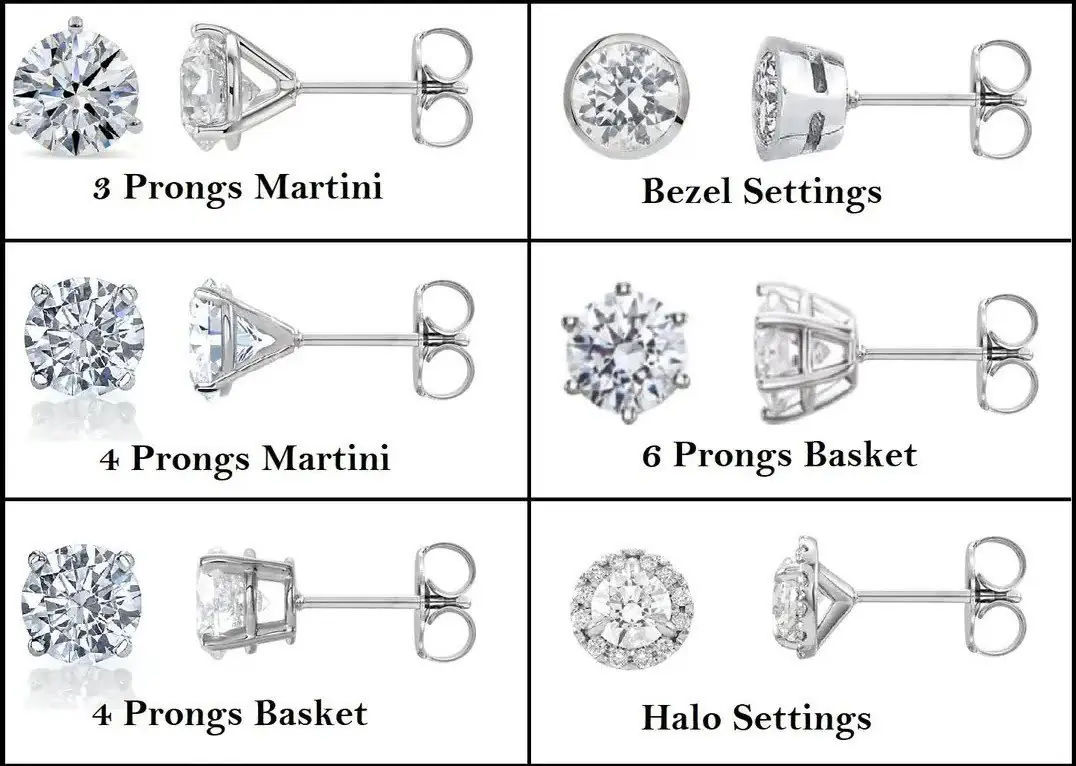
Another important detail to consider is how your diamond studs are set. Prong settings allow more of the diamond to remain visible and are a popular choice for showcasing its brilliance. Bezel settings surround the diamond with a thin rim of metal, offering additional protection and a smooth appearance. Both are attractive options, but your choice may depend on your personal style and how often you plan to wear your earrings.
Comfort is also worth considering, especially if you plan to wear your diamond studs throughout the day. Larger diamonds can feel heavier on the earlobes, while smaller studs are often more comfortable for everyday activities. Secure earring backs are equally important, whether you prefer traditional friction backs or screw backs for added security.
Lab-Grown vs. Natural Diamond Stud Earrings
One more tidbit of information we need to touch on to help you with your diamond-studded earring selection is comparing lab-grown and naturally occurring diamonds. They have similarities as well as stark differences. Firstly, their physical, chemical, and optical properties are essentially the same. Both are made of carbon, arranged in a crystal lattice, and share the exact same hardness. They’re virtually indistinguishable to the naked eye.
However, natural diamonds take millions to billions of years to form, while lab-grown diamonds can be formed in weeks. The biggest difference for you as a consumer is price: natural diamonds are generally much more expensive because of their natural origin, relative scarcity, and market demand. Lab-grown diamonds can cost significantly less than natural diamonds, sometimes as much as 90% less.
However, their resale value is generally much lower, particularly as production increases and manufacturing technology continues to improve. So if you choose lab-grown, be sure to keep it a while.
Find Your Perfect Diamond Stud Earrings at Hendrickson’s Fine Jewelry
If you have questions or need help comparing diamond-studded earrings, feel free to visit us at Hendrickson’s Fine Jewelry!
References
1. Gemological Institute of America (GIA). Guide to Diamond Shapes for Engagement Rings
2. Gemological Institute of America (GIA). Understanding the 4Cs of Diamond Quality
3. Gemological Institute of America (GIA). Diamond Carat Weight
4. Gemological Institute of America (GIA). Seven Things to Know When Looking at Diamond Clarity
5. Gemological Institute of America (GIA). Is There a Difference Between Natural and Laboratory-Grown Diamonds?
6. Diamond Watcher. Diamond Price Index: Lab vs. Natural Prices